
When the view is one of the reasons you love your property, a railing should protect the edge of the deck without becoming the first thing you notice. That is the idea behind topless glass railings: tempered glass panels create the guard while eliminating the traditional top rail that can cut across a lake, mountain, or valley sightline.
For Okanagan homes, however, a clean appearance is only part of the decision. A successful system also needs the right glass, mounting configuration, engineering, and structural support for the site.
What Makes a Topless Glass Railing Different?
Traditional framed glass systems use posts and rails to support thinner glass panels. A topless system removes the continuous upper rail and relies on thicker tempered safety glass and engineered mounting components. The result is a more minimal profile that keeps attention on the landscape. If you are still deciding between the two, our comparison of topless vs. framed glass railings covers the trade-offs in depth.
Legacy Glass Railings offers Topless Glass Railings using 10mm and 12mm tempered glass with its low-profile post system. The appropriate configuration depends on the property, exposure, elevation, attachment conditions, and engineering requirements.
For homeowners, the key benefit is visual continuity. When seated on a deck or looking outside from an adjacent living room, fewer horizontal components interrupt the view. This is especially valuable on lake-facing decks, second-storey balconies, rooftop spaces, and properties where the outdoor area was intentionally designed around scenery.
10mm vs. 12mm Glass
Both options are tempered safety glass, but thickness affects rigidity and which applications a panel may suit. Ten-millimetre glass is commonly suited to residential applications, while 12mm glass may be recommended where added rigidity is desirable, including more exposed or demanding installations.
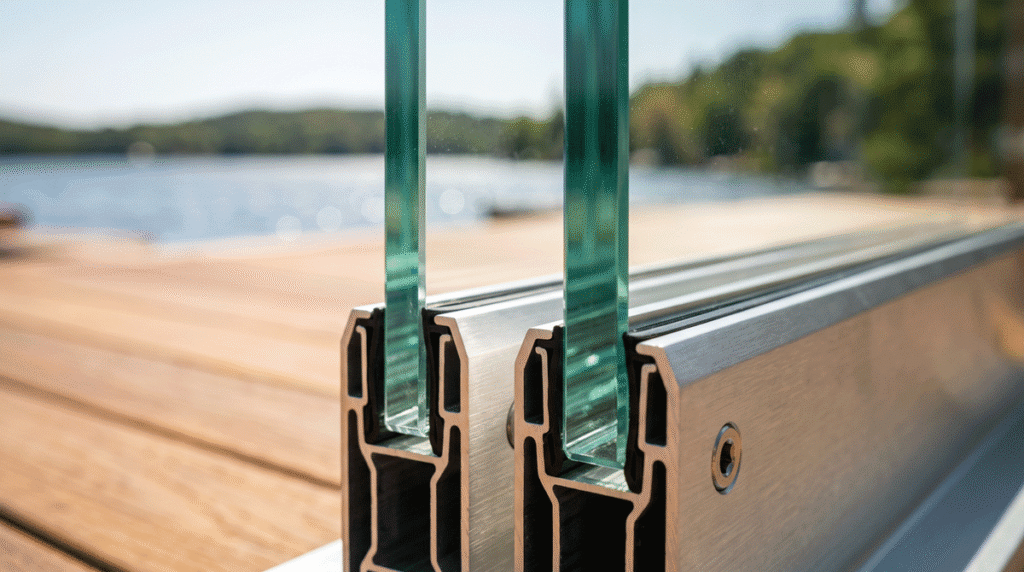
Thicker is not automatically “better” for every project. Glass selection should follow the engineered system, panel dimensions, wind exposure, mounting method, and project requirements. That is why an on-site assessment is more useful than choosing glass thickness from a product photo.
Surface Mount or Fascia Mount?
The railing also has to connect to the deck. Surface-mounted posts attach to the top of the deck structure. Fascia-mounted systems attach at the side edge, which can preserve a more usable deck surface and change the visual profile.
Neither approach is universally superior. The right choice depends on framing, waterproofing, edge conditions, stairs, transitions, and the intended appearance. If you’re also replacing the deck surface, coordinate mounting details before the waterproof layer is finished so you can plan penetrations and transitions correctly.
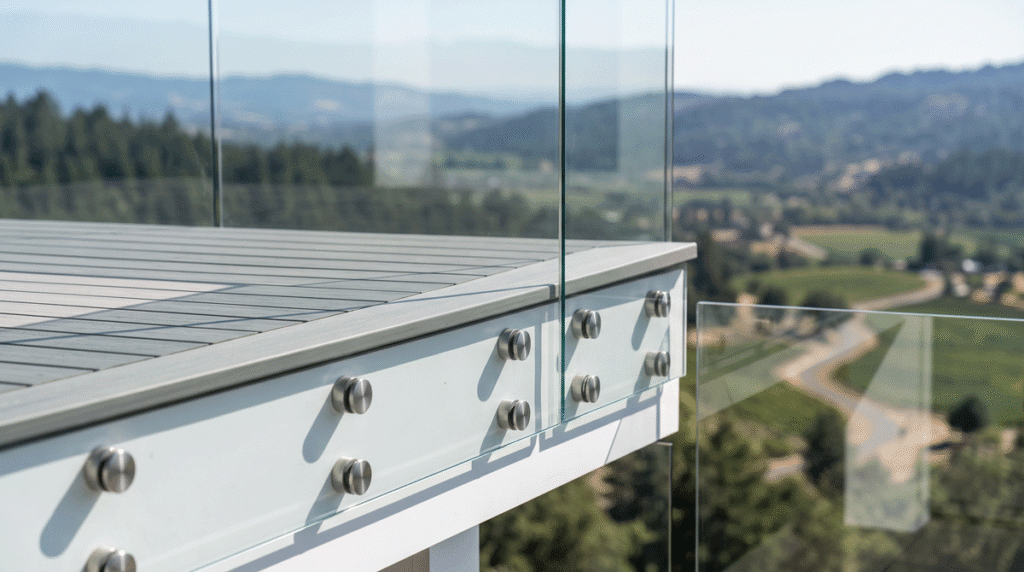
Design for the Real View, Not Just the Deck Plan
Consider a railing layout from the places where people actually experience the property. Stand inside the kitchen, living room, and primary seating areas. Sit at table height. Look toward the lake or landscape. Those sightlines can influence post locations, glass-panel divisions, and where a different railing type may make more sense.
Also consider wind and privacy. Clear glass can help reduce direct wind while preserving visibility, but some areas may benefit from frosted, tinted, or louvered privacy patio railings. A mixed design can keep the main view open while screening a neighbouring patio, hot tub, or side yard.
What to Ask Before Installation
Ask how the system is engineered for your specific property, what glass thickness is proposed, how posts will be anchored, and whether the existing deck structure is suitable. Clarify how stairs, gates, corners, and elevation changes will be handled. If permits or documentation are relevant to the project, determine what information you will provide before fabrication begins. It also helps to understand pricing early; our 2026 glass railing price guide for Kelowna explains what drives the cost of a topless system.
You should also discuss lead time and sequencing. Custom glass is measured and fabricated to fit the project, so accurate site conditions matter. Completing structural or deck-surface work before final measurements can prevent costly changes later.
Is Topless Glass Right for Your Home?
Topless glass is an excellent fit for homeowners who want a premium, contemporary railing with minimal interruption to an important view. It may not be necessary on every side of a property, and combining glass with aluminum picket or privacy sections can be a smart way to balance design priorities.
Legacy Glass Railings serves Kelowna, West Kelowna, Lake Country, Vernon, Penticton, and communities across the Okanagan. A site consultation can help determine whether a topless system, framed glass, aluminum picket, or combination design best fits your property.
Frequently Asked Questions
What is a topless glass railing?
A topless glass railing is a tempered-glass guard that removes the traditional top rail, so nothing horizontal cuts across your view. Instead of thin glass held inside posts and rails, it uses thicker tempered safety glass and engineered, low-profile mounting hardware. The result is a nearly uninterrupted sightline to the lake, mountains, or valley, which is why it is so popular on Okanagan view properties.
Should I choose 10mm or 12mm glass?
Both are tempered safety glass; the difference is rigidity. Ten-millimetre glass is commonly suited to typical residential decks, while 12mm is often recommended for more exposed, elevated, or demanding installations where added rigidity helps. Thicker is not automatically better; the right choice follows the engineered system, panel size, wind exposure, and mounting method for your specific site, which is best confirmed with an on-site assessment.
Are topless glass railings safe and code-compliant?
Yes, when they are properly engineered and installed. They use tempered safety glass and mounting components designed for the loads at your property, including wind and deck height. A professional installer engineers the system for your site conditions and can clarify what documentation is provided, so the railing meets applicable safety requirements while still looking minimal.
Can I install topless glass on only part of my deck?
Absolutely, and it is often the best-value approach. Many homeowners use topless glass on the primary view corridor and switch to framed glass, aluminum pickets, or privacy panels on stairs, side edges, or areas facing a neighbour. Coordinating the post finishes and proportions keeps the mixed system looking like one intentional design.
Talk to Legacy Glass Railings
Ready to protect your view without hiding it? Book a site consultation and Legacy Glass Railings will recommend the right glass, thickness, and mounting for your Okanagan property.